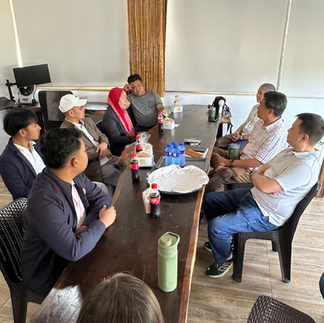
PS Group meeting with Cotabato State University Heads
- Feb 12
- 2 min read
January 10, 2026
FISHERIES AND INNOVATION
Focus : Sustainable Aquaculture and Institutional Partnerships
"This meaningful contribution has greatly strengthened fisheries research, instruction, and sustainable development. " -- University President, Sema G. Dilna, EdD, Cotabato State University.
Spotlight: The Shift to Salt-Tolerant Tilapia
While tilapia in the Philippines is traditionally a freshwater staple, a groundbreaking shift is occurring. Following the successful ventures into King Crab cultivation, the focus is now turning toward the UP SALT Tilapia (Saline-tolerant Tilapia).
● The Project: A 3-year initiative aimed at perfecting the "albino-looking" salt-tolerant breed.
● The Goal: To expand tilapia production into brackish and coastal waters, increasing food security and providing farmers with more versatile options.
● Why it matters: This breed adapts to higher salinity, making it resilient against changing water conditions and opening up new coastal "demo farm" opportunities.
Partnership Highlights: A Milestone for Cotabato State University
In a significant move for regional research, a Certificate of Appreciation was recently presented to the PS Group of Companies for their generous land donation.
This land donation has officially enabled the establishment of the Demo Farm Fishpond Fisheries Research Center, creating a hub for students and researchers to study fingerling development and sustainable harvesting techniques.
From Pond to Table
The research isn't just about biology; it’s about the community. Recent activities at the demo farm included:
● Harvesting Success: Successful trial harvests (averaging 3kg per batch).
● Product Development: Exploring "Luto na" (Ready-to-eat) tilapia products and innovative concepts like "Tilapia Donut."
● Future Tech: Looking into pregnancy-safe nutritional drinks and the integration of fingerling distribution programs.
Broader Impact: Beyond the Fishpond
The UP SALT Tilapia initiative is more than a research project—it is a movement toward resilience and empowerment. The program aims to:
Contribute to Food Security: Strengthening the Philippines’ supply of affordable protein through adaptable aquaculture.
Enhance Academic Excellence: Providing students and researchers with hands-on opportunities in fisheries science, sustainability, and product innovation.
Empower Communities: Creating livelihood options for coastal farmers and entrepreneurs through demo farms and ready-to-eat product development.
Advance Sustainable Practices: Integrating research with responsible resource management to ensure long-term ecological balance.
This milestone marks a convergence of science, education, and community—transforming the humble tilapia into a symbol of innovation and resilience.
With the land secured and the salt-tolerant tilapia project underway,
the future of aquaculture in Cotabato looks bright.




Comments